

Contents
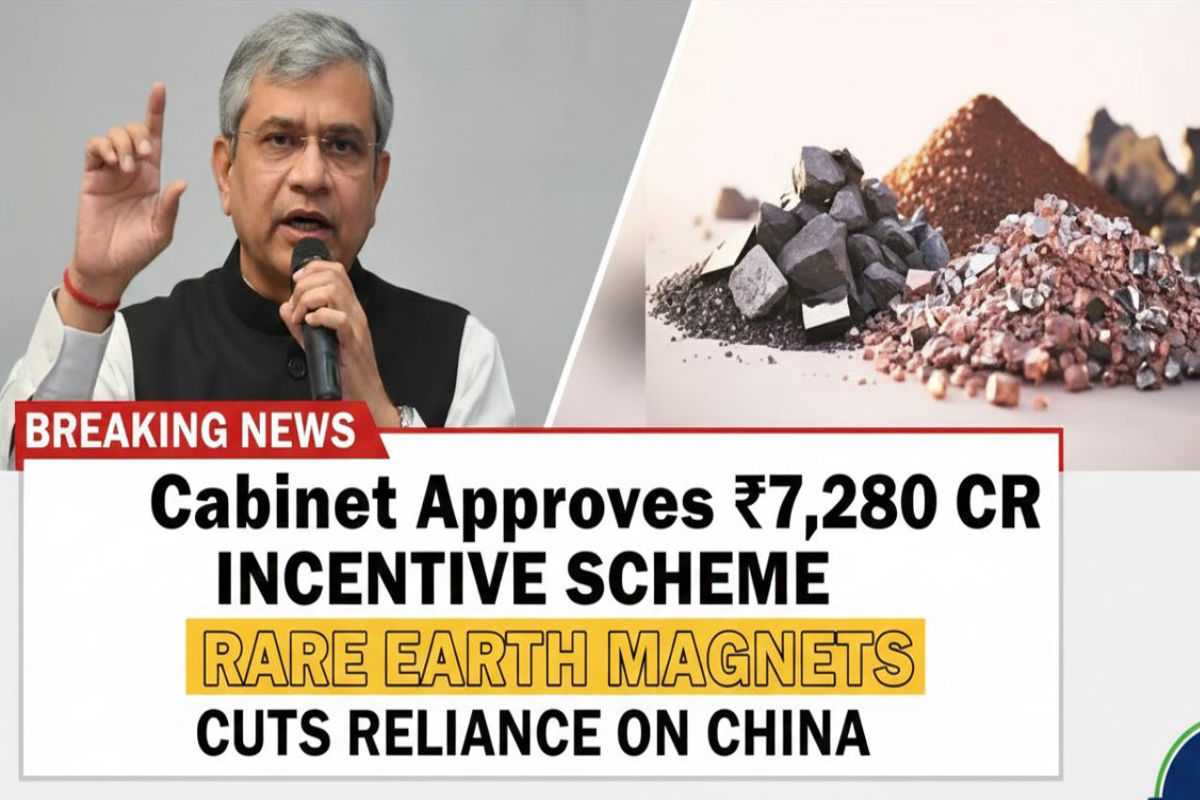
India is taking a big step towards self-reliance with a new ₹7,280 crore scheme for manufacturing rare-earth permanent magnets. This initiative aims to boost local production, cut imports, and support sectors like electric vehicles and renewable energy.
What Is the Rare Earth Magnet Scheme?
The Indian Cabinet has approved a ₹7,280 crore scheme to promote the manufacturing of sintered rare-earth permanent magnets (REPM). These magnets are essential for high-tech applications such as electric vehicles, renewable energy, aerospace, and defence. India currently imports almost all of the 900 tonnes of REPM used annually, despite having the world’s fifth-largest rare earth reserves.
Key Features of the Scheme
-
The scheme will create a production capacity of 6,000 tonnes of REPM per year.
-
Five beneficiaries will be selected through a global competitive bidding process, each eligible for up to 1,200 tonnes per year.
-
It includes ₹6,450 crore in sales-linked incentives for five years and ₹750 crore as a capital subsidy for setting up manufacturing facilities.
-
The scheme will run for seven years: two years for setting up units and five years for incentive disbursement.
Why Is This Scheme Important?
India’s dependence on imports for REPMs has been a major concern. This new initiative aims to build an integrated domestic supply chain, from converting rare earth oxides into metals, metals into alloys, and alloys into finished magnets. This will help meet the growing demand from electric vehicles, renewable energy, and advanced electronics.
Industry and Expert Reactions
Industry leaders welcome the scheme, calling it a strategic move to strengthen India’s technological competitiveness and support clean mobility solutions. The Society of Indian Automobile Manufacturers (SIAM) and the Automotive Component Manufacturers Association (ACMA) see this as a step towards building a resilient supply chain for electric vehicles and advanced mobility.
Experts say the real test will be disciplined implementation, ensuring access to technology, high-quality processing, responsible mining, and strong ESG (environment, social, governance) practices.
Broader Impact on India Economy
This scheme is expected to generate employment, boost self-reliance, and position India as a key player in the global REPM market. It will also support India’s commitment to achieving net zero by 2070 and reducing dependence on imported crude oil, enhancing the nation’s energy security.