

Contents
A recent MIT study reveals that AI can already replace 11.7% of US workers, affecting $1.2 trillion in wages. The research uses a new digital tool to map job risks and help policymakers prepare for the future of work.
What the MIT Study Found
A new study from the Massachusetts Institute of Technology (MIT) puts a number on how many US jobs AI can already replace. The research shows that AI is capable of performing tasks done by 11.7% of the US workforce, which amounts to about $1.2 trillion in wages. This impact is felt across major sectors, including finance, healthcare, and professional services.
The Iceberg Index: A Digital Model of the US Labor Market
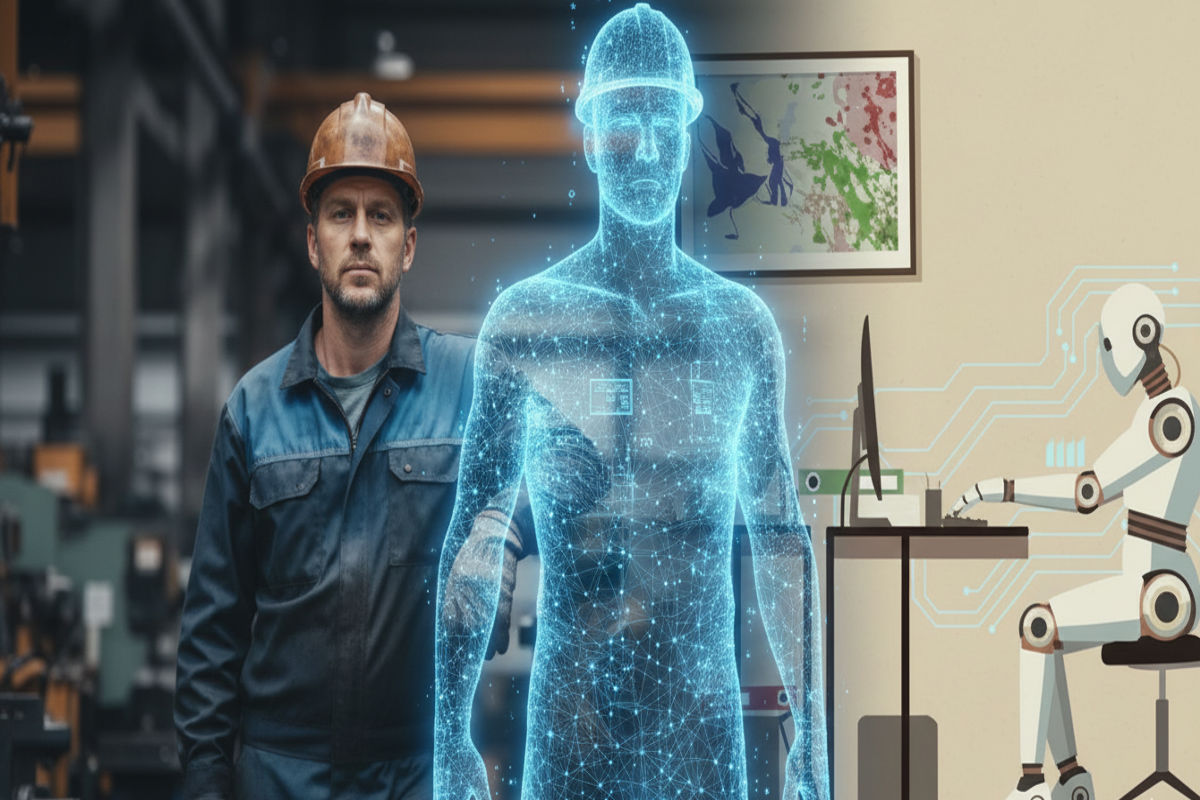
The study uses a new tool called the Iceberg Index, developed by MIT and Oak Ridge National Laboratory. The Iceberg Index creates a digital twin of the US labor market, simulating how 151 million workers interact and how AI and government policies might affect them. The index maps more than 32,000 skills across 923 occupations in 3,000 counties, identifying where AI can already perform these skills.
How the Iceberg Index Works
The Iceberg Index treats each worker as an individual agent, tagged with skills, tasks, occupation, and location. It runs population-level experiments to show how AI changes tasks, skills, and labor flows before these changes appear in the real economy. The index reveals that visible layoffs and role shifts in tech, computing, and IT account for only 2.2% of total wage exposure, while the deeper, less visible exposure is much larger.
Implications for Workers and Policymakers
The study is not a prediction of when or where jobs will be lost but a structured way for policymakers to explore different scenarios before making major investments in retraining and education. The Iceberg Index helps identify job disruption hotspots, prioritize training and infrastructure investments, and test interventions before committing billions to implementation.
What Lies Ahead
The findings highlight the need for proactive planning to prepare workers for the changes brought by AI. Policymakers and business leaders can use the Iceberg Index to identify at-risk jobs and regions, prioritize training and infrastructure investments, and test interventions before making large-scale commitments.