

Contents
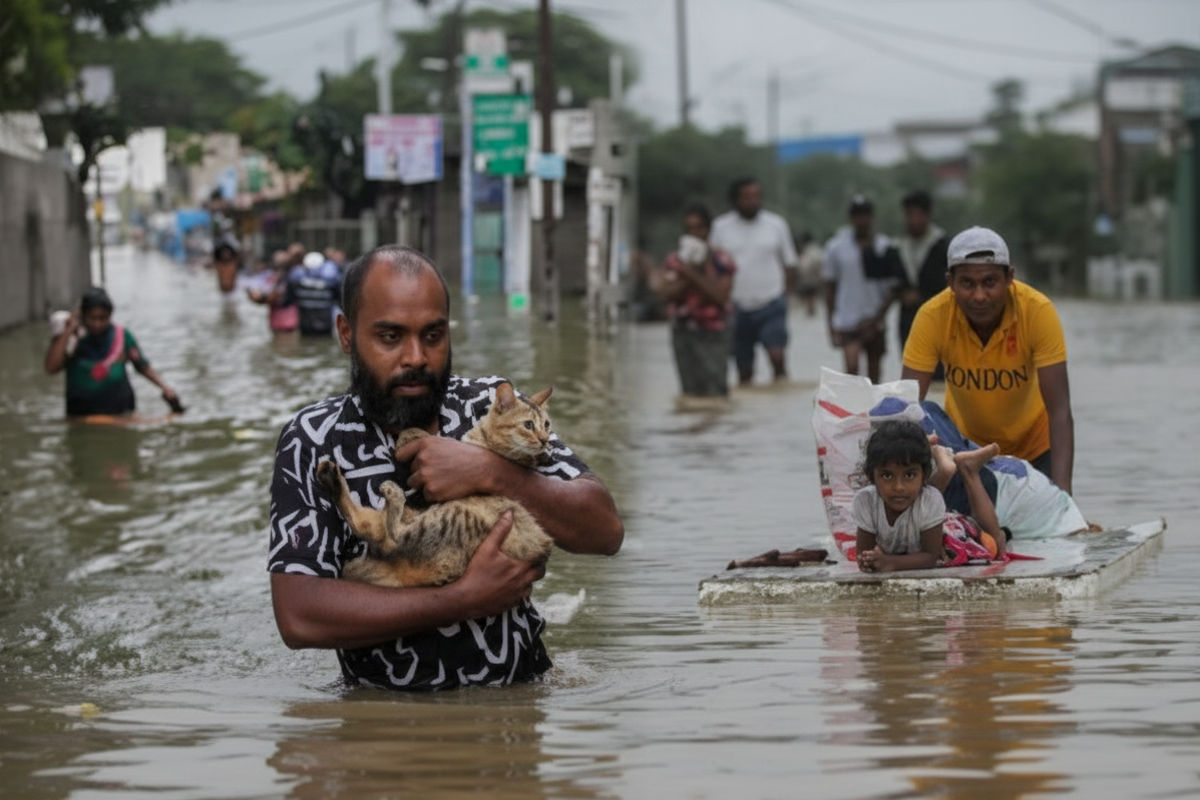
Sri Lanka has been plunged into a national crisis, declaring a state of emergency after Cyclone Ditwah ripped across the island, causing widespread destruction. The official death toll stands at 132, with 176 people tragically missing. The cyclone’s fury has decimated infrastructure, destroying over 15,000 homes and forcing more than 78,000 people to seek refuge in temporary government shelters. With the country reeling from one of its worst natural disasters in years, the government has urgently appealed for international aid, with India swiftly responding by deploying relief supplies under Operation Sagar Bandhu. This article provides a clear summary of the cyclone’s impact, the ongoing rescue efforts, and the global response to this humanitarian crisis.
Sri Lanka State of Emergency After Cyclone Ditwah
Sri Lanka has declared a state of emergency following the devastating impact of Cyclone Ditwah. The cyclone has caused widespread destruction, with 132 confirmed dead and 176 people still missing. Over 15,000 homes have been destroyed, and 78,000 people have been forced into temporary shelters.
Impact and Rescue Efforts
The Disaster Management Centre (DMC) reported that relief operations have been reinforced with deployments from the army, navy, and air force. Fresh landslides in the central district of Kandy have submerged sections of the main access road, while flooding worsened in low-lying areas, prompting evacuations along the Kelani River.
International Aid and Support
The Sri Lankan government has called for international assistance and urged Sri Lankans abroad to contribute cash donations. India responded quickly, sending two planeloads of relief supplies, and an Indian warship already in Colombo donated its rations to support victims. Prime Minister Narendra Modi expressed condolences and reaffirmed India’s support for Sri Lanka.
Broader Context
Cyclone Ditwah is Sri Lanka’s deadliest natural disaster since 2017, when floods and landslides claimed over 200 lives and displaced hundreds of thousands. The government’s swift action and international support are crucial in the ongoing rescue and relief efforts.